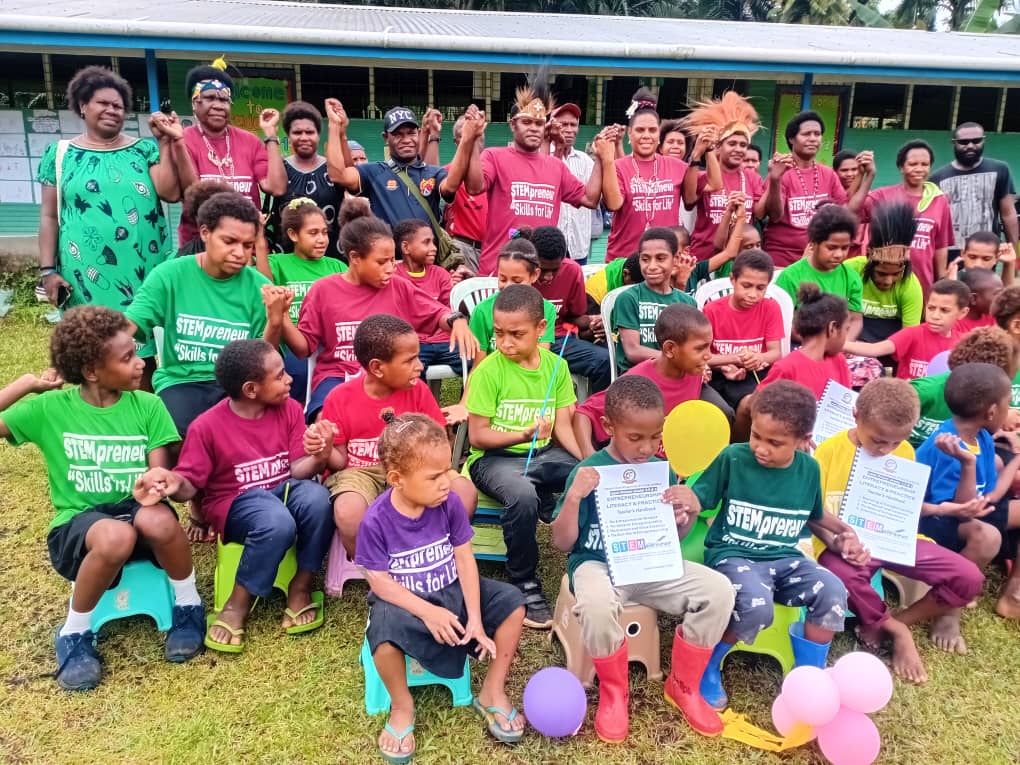

In a bid to shape education delivery to scaffold real-world skills, a private school has undertaken a soft launch for a new school-based curriculum on Friday, May 9th, 2025, at its campus. The Cross Country (STEM) School of Excellence in Kiunga, Western Province, has officially launched a groundbreaking new curriculum under the flagship name, “Entrepreneurship Literacy & Practice,” also known as the STEMpreneur Curriculum. This initiative aims to integrate entrepreneurship education with Science, Technology, Engineering, and Mathematics (STEM) principles, providing students with a well-rounded, practical education that prepares them for real-world challenges. The launching ceremony, held on May 9, 2025, at the school campus, brought together the school’s board members, teachers, parents, and students. In his keynote address, Elias Wranga, the school’s founder and curriculum developer, emphasized the importance of merging STEM with entrepreneurship to cultivate a generation of pragmatic, creative, innovative, and ethical leaders who can drive social and economic development in Papua New Guinea.
According to the curriculum developer, he realised that every year our graduates from tertiary institutions in the country graduate without life skills and a real project or problem at hand to work on after graduation. Wranga thinks that our education system needs to reorganize how the national curriculum is being implemented by scaffolding real-world skills. Therefore, this curriculum lays the foundation for school graduates to build their entrepreneurial endeavour after graduation. “Graduation must not be a finishing line. Graduation must be a launch pad for innovative products, services and systems by our graduates,” Wranga passionately stated, highlighting the school’s vision to transform students into problem-solvers and wealth creators as the key pillars for this innovative curriculum.
This curriculum is an enhancement of the PNG’s SBE Curriculum Framework. The learning contents of the school-based curriculum are a combination of content and practical skills captured in the national curriculum framework to emphasize the practical application of knowledge to create wealth and sustainable development. Wranga explained that entrepreneurship is not just making a business or making money, it’s about
identifying a problem to solve or a need to meet. It then creates a value chain, cash flow, employment and a collective sustainable development. He emphasised that such an initiative at the primary school level is appropriate to lay a strong foundation for future national wealth creation and prosperity. The STEMpreneur Curriculum is tailored for students from Grades 1 to 6 and is structured around eight key themes, including the roles of entrepreneurs, creativity and innovation, the entrepreneurial mindset,and the basics of business and value creation. Lower Primary (Grades 1-3) covers the following topics: Beginning of Entrepreneurship, Producer and Consumer roles, Entrepreneurial roles, and Creativity; while
School Board Chairman, Ps Jimmy Jimbo and school Founder, Elias Wranga officiating the ribbon cutting with two Grade one students to officially mark the launching. Upper Primary (Grades 4-6) focuses on the Entrepreneurial Mindset, Skills for Entrepreneurship, Business and Value Creation, and Real-World Entrepreneurship. With each grade level, students will explore age-appropriate concepts, from understanding basic needs and wants in Grade 1 to engaging in small-scale entrepreneurial projects in Grade 6.
The curriculum rationale is underpinned by the National SBE Curriculum Framework for primary school, United Nations Sustainable Development Goals (UNSDGs), PNG Vision 2050, Medium Term Development Plan IV (MTDP IV), the EntreComp Framework, and the school founder’s research and studies for over ten years in the innovative education space. A defining feature of this curriculum is its integration of biblical scriptures and principles, instilling values such as ethical leadership, integrity, and a spirit of service. This approach aligns with the school’s commitment to nurturing not only academic excellence but also strong moral character among its students, providing foundational development for STEMpreneurs in the country.
Parents were encouraged to actively support their children’s learning journey, reinforcing entrepreneurial principles at home. Students, on the other hand, were inspired to embrace this opportunity to become future innovators and leaders. Wranga further emphasized that the curriculum was developed with a clear vision to: “Providing an Inclusive, Equitable, and Sustainable Education with Global Relevance Through Practical and Lifelong Learning for the Real World.” He expressed his desire to see this educational model adopted nationwide.
The STEMpreneur Curriculum will begin full implementation in the coming weeks. The school aims to provide students with practical skills in financial literacy, digital literacy, and entrepreneurship. This initiative is expected to significantly impact the way education is delivered in this private school and set a precedent for other schools in PNG to follow.
Wranga is keen to set up similar STEM and entrepreneurship schools nationwide to impact the next generation to apply their knowledge gained in schools to real-world entrepreneurial endeavour. A local community leader and entrepreneur, Moses Tenai inspired the students and showing support this initiative. Slogan: “STEMpreneur Skills For Life” – A Chant of Change.
The event concluded with a powerful slogan, “STEMpreneur Skills For Life,” chanted by students, teachers, and parents, symbolizing a collective commitment to this transformative educational journey.
For those who would like to send their children to this school or partner and set up a similar school anywhere in PNG or across the Pacific Island countries, can contact him: WhatsApp Mobile No: (675) 71943535, Email: eliaswranga331@gmail.com, Facebook Page, and LinkedIn: Elias Wranga.