
Celebrating the 1Oth Anniversary of STEM AIE Education Journey
“From a personal dream and humble beginning to a co-operate and national transformation vision. Celebrating a decade of commitment and perseverance.”
By Elias Wranga | Founder & Principal Director- STEM AIE ( Science, Technology, Engineering, Mathematics, Arts, Innovation, Enterprising)
About the Founders of STEM AIE Education

The STEM AIE Education concept in Papua New Guinea (PNG) was initiated by my spouse and me in 2016. We are both from East Sepik Province and lived in Kiunga, Western Province, with our four children. This concept was founded when I began teaching in a secondary school in Kiunga in 2010. This is our story of how we have started this personal dream with humble beginnings, and after ten years, it has become a co-operate and national movement for education transformation in the country.

How did I realise that the conventional education system needs to change?

Over seven years of my reflective teaching, I watched as bright young minds sat quietly in classrooms, memorizing information they would soon forget. Science experiments remained untouched, real-world connection was non-existent, subject contents were purely theoretical, and creativity was suppressed by rigid schedules and examinations that rewarded memorization rather than understanding and practical application. Learning dispositions like curiosity, creativity, resilience, and responsibility were not developed. Children learned to fear failure instead of learning to explore and solve real problems. The rote learning was just for tests and exams preparation, but not for life preparation when students leave school. Therefore, I believed deeply that children deserved more than memorized answers; they deserved a school where learning was alive, mistakes were valued as lessons, and curiosity could thrive, lifelong, practical, and sustainable learning.
In 2016, my spouse and I transformed our belief into action by establishing the Cross Country School of Excellence. What began as whispered dreams at the dinner table with my spouse became real with makeshift classrooms, limited materials, and a curriculum built on hands-on for practical learning. Every obstacle, financial strain, scepticism, and doubt from the learned people only strengthened our resolve.
A decade later, STEM AIE Education has grown from a personal dream to a national movement of education transformation. Parents witness firsthand the transformation in their children that the conventional education system could never deliver. Children from our school who transferred to public school normally skip one or two grades, as our learning standards were higher through practical learning. We continued pushing boundaries, imagining a country where education inspires, empowers, and builds future leaders and agents of change through an innovative education system.
.
What inspired me to initiate this Novel Project: STEM AIE School?
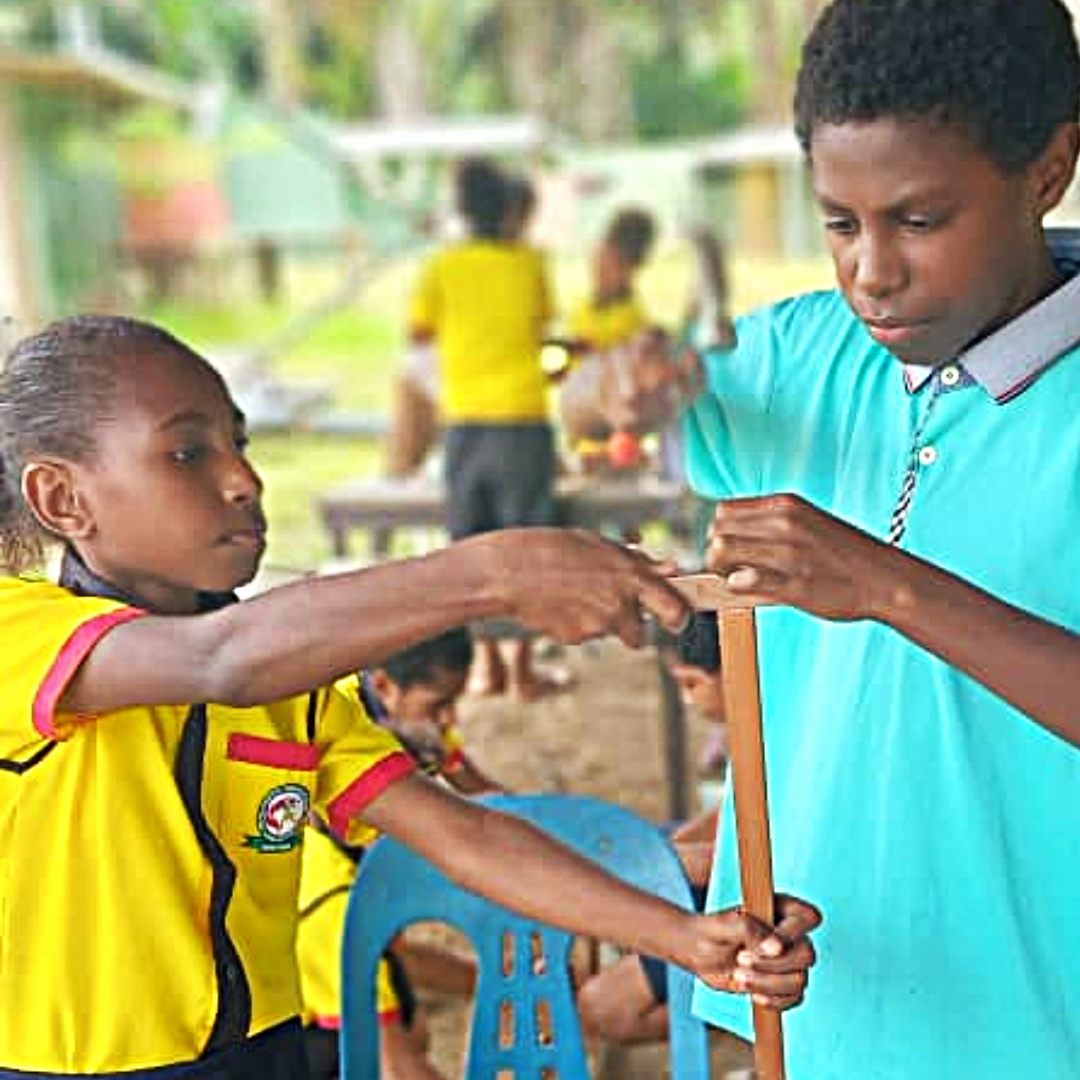
Being a science teacher in the public school system, I realised that children sit quietly, memorizing facts without understanding. Students were trained to be sponges, to absorb, to comply, not to think; to recall, not to question, to obey, not to innovate. I saw creativity suffocated, curiosity ignored, and potential wasted. The rote-learning approach forced students to memorize for exams, leaving no room for them to explore, experiment, or make mistakes, the very things that spark real learning. Nothing to inspire creativity, just textbooks, memorization, and standardized testing.
I felt something was not right with the way we were teaching the student. It was just test and exam preparations, but not life preparation with skills, dispositions, and character development. Students left school with knowledge not useful in real life.
The system demanded compliance, not thinking; exams, not understanding; schedules, not curiosity. Every day I taught, I carried the tension between what was required and what was right, between the curriculum’s limitations and the limitless potential I saw in my students. The public school system confined learning to narrow boundaries. Lessons were dictated entirely by the teacher, textbooks, and rigid assessment schedules, culminating in a high-stakes exam at the end of the year. Creativity, inquiry, experimentation, and independent thought were largely ignored. Children were judged by their ability to memorize and recall, not by their understanding, problem-solving, or innovation. It was a suffocating environment that left both students and teachers trapped. I knew that something had to change, and I began to dream of a new way, a system that connected learning to the real world, that encouraged children to engage actively with knowledge, to learn by doing, and to cultivate skills that would serve them beyond the classroom walls and school gates.
By 2014, I began sharing the idea with a few colleagues, hoping to gain support to formally implement STEM Project-Based Learning (STEM PBL) in our school. The idea was good; however, the public school cannot easily adopt it due to its set policies and schedules.
I shared this vision with my spouse as we were on the verge of something transformative, something no other school has attempted. It was not an abstract dream; it was a mission. We committed to pursuing it together, knowing it would require sacrifice, persistence, and unwavering belief in the power of education to change lives.
In June 2014, we started a prototype learning space under our house. My spouse brought our two children and other teachers’ children aged between three to five. They learned the alphabet, phonics, numbers, colouring, writing, and basic practical lessons through games and plays. Observing these young minds at work was a revelation. Their curiosity was natural, their joy unrestrained, and their engagement complete.
In March 2015, I sponsored her three-month ECE training in Port Moresby. Her training allowed us to formalize the approach while retaining the playful, child-centered essence that had sparked the transformation in our prototype space.
In June 2015, I helped her apply to public and private elementary schools to introduce the STEM Project-Based Learning (STEM PBL). The applications were all rejected as the idea was new and untested.
By July 2015, the idea of establishing a school fully dedicated to STEM AIE education had taken root. The dream was no longer a possibility; it was a mission. Every challenge, rejection, and obstacle had brought us closer to this point, and nothing would stop us from bringing it to life.
How did we start the Cross Country School of Excellence?
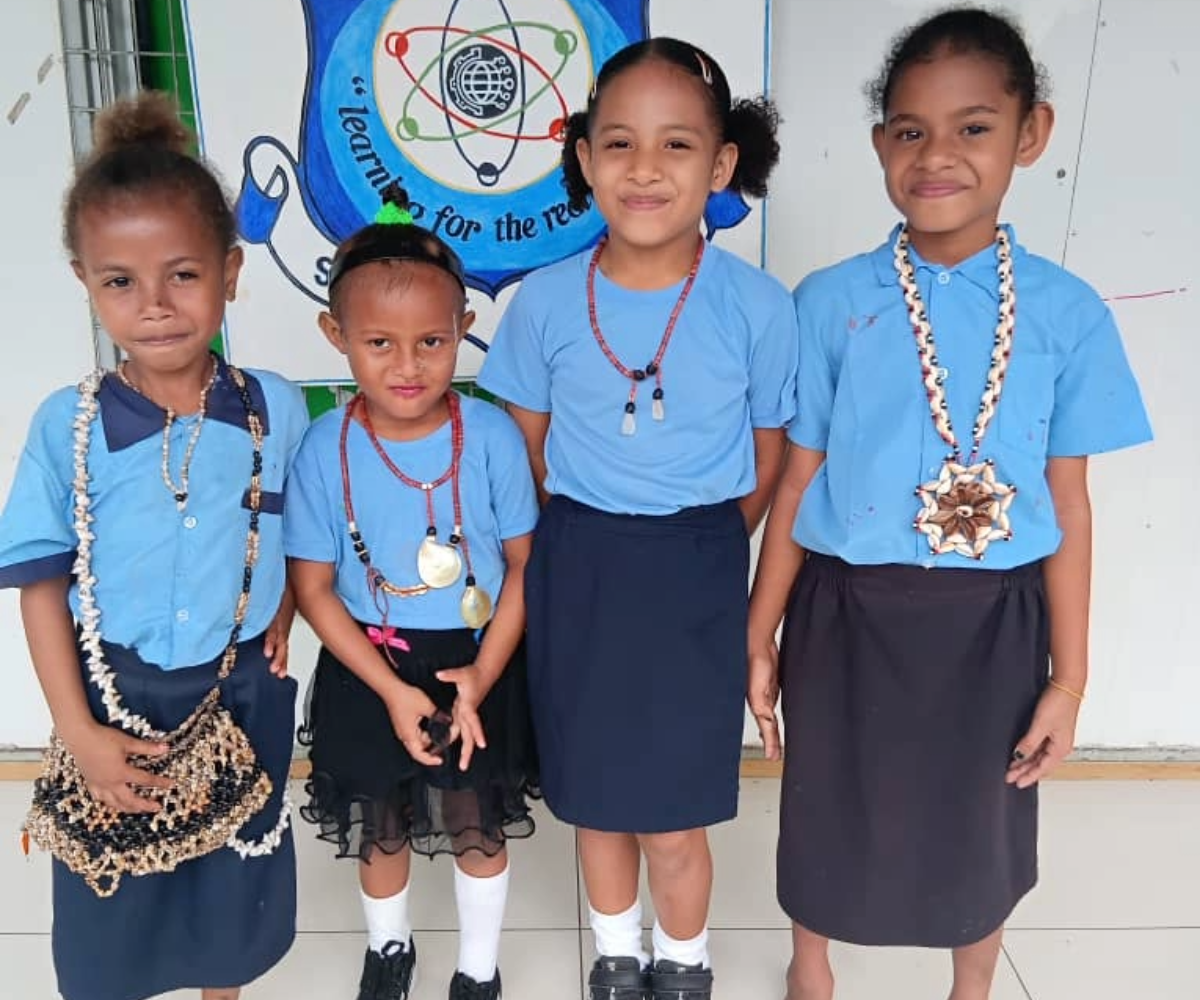
The vision for the Cross Country School of Excellence began as a simple yet powerful idea, a vision that I wrote on a piece of paper. In those early days, STEM AIE was just a scratch on paper; there were few references, no scholarly publications, no internet research readily available, and Google was limited as the STEM Education concept was recently trialled out in the US schools. Generative Artificial Intelligence (GenAI) tools like Gemini or ChatGPT didn’t exist to guide ideas. The STEM AIE had to be imagined, visualized, and pieced together from experience, observation, and faith.
As we prayed and pondered on this journey, the vision became clearer and extended beyond our dinner table. In August 2015, after weeks of discussions and negotiations, a nearby landowner agreed to let us establish the school on his land. His trust and support became the first tangible step toward turning our vision into reality. With the land secured, we approached a local dozer owner, and he lent his machine to help with land clearing and preparation. It was a small but significant step forward, setting the foundation for the work ahead. We also reached out to people in the community to contribute local, cost-free materials for the classroom construction, and the work was well underway. At every stage, from the dinner table discussions to the first classroom walls rising from the ground, the Cross Country School of Excellence was becoming a living testament of persistence, vision, and the belief that education could be radically different, deeply human, and profoundly transformative..
What were some challenges faced, and how did you overcome them?
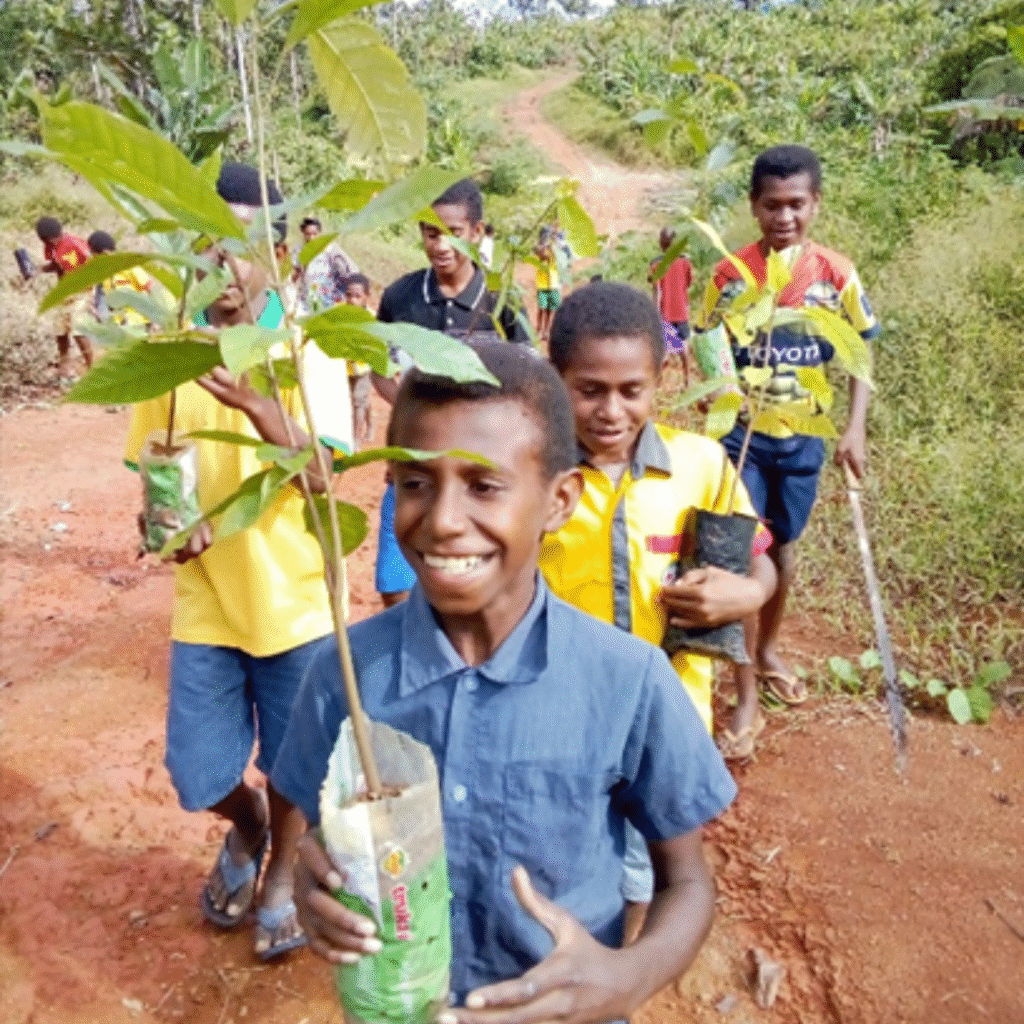
One of the biggest challenges in establishing this novel project was the financial limitation. The STEM AIE Education idea was not popular, widely understood, or lucrative enough for any investor to take a risk. No donors, government agencies, or financial institutions were willing to spend a single kina on a concept they didn’t understand.
We started small, so small that it felt almost fragile, with just K200. Even with such humble beginnings, our passion and belief never faded. My salary was the main financial lifeline. The financial constraints were never a limitation; they were a challenge we welcomed, a test to see how far our determination would take us.
In January 2016, we invited community leaders, stakeholders, and neighbours to the grand school opening and witnessed what had been built from pure determination and vision. On the 28th of January 2016, the STEM AIE Education concept was officially launched, and the school opened its doors for enrolment.
What are some of the achievements over the past ten years of STEM AIE school transformation?
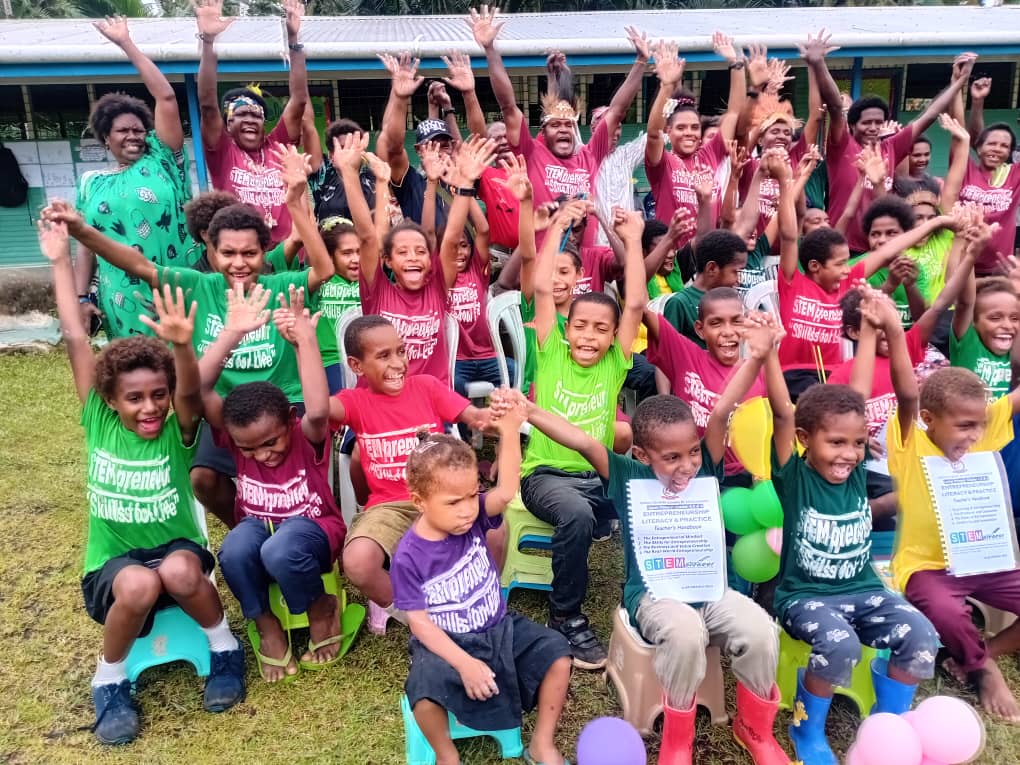
In 2016, my spouse and I established a new school, supported by two employed teachers. Partnering with Bilum Books Publishing, we received resources and training that accelerated student literacy and impressed parents.
In 2017, I made the difficult decision to leave my secure public-school job to lead the school full-time. With full parental support, I taught Grades 1 and 2, expanded practical learning, and provided professional development for teachers.
In 2018, we launched a school cocoa nursery, combining science learning with sustainability. The project raised K18,000, funding a 4-in-1 classroom. Our success impressed the Provincial Education Advisor, who promoted our STEM approach at a national education conference.
Media coverage in 2019 drew attention from Australia Awards PNG (AAPNG), which awarded me a scholarship. In 2020, I presented our model to the Curriculum Development Division, paving the way for STEM in the national curriculum. Despite COVID-19, I completed a Graduate Certificate in STEM Education at QUT.
Our students gained international recognition in 2021, winning the Pacific Science Circus Award. In 2022, I graduated with distinction, becoming a QUT Impact Ambassador and receiving the Impact Story Award for sustainable cocoa farming and education.
From 2023–2024, I co-designed STEM training for university lecturers and presented our model at an international science conference, winning the top award for education transformation.
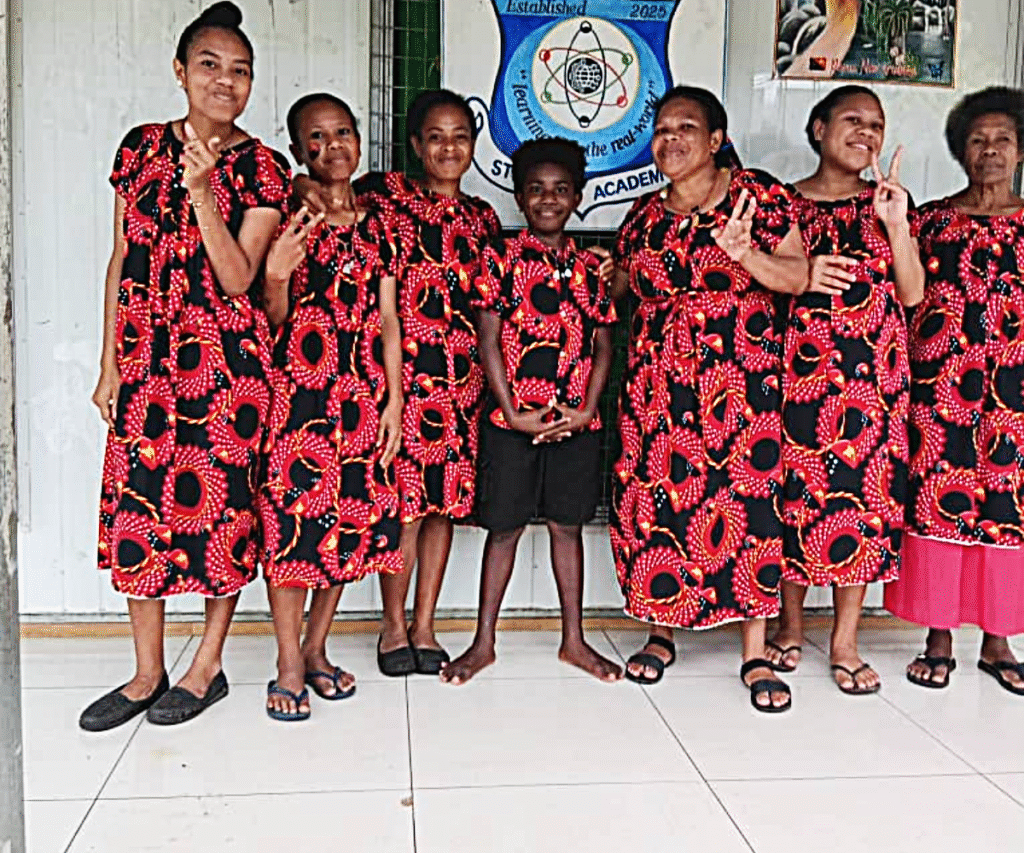
In 2025, BSP Kiunga Branch donated ICT equipment, and we officially opened the STEM AIE Academy in Alotau, expanding the model. We also launched an Entrepreneurship Curriculum, combining classroom theory with real-world projects to build confidence, creativity, and practical skills.
Acknowledgement of various individuals and organisations for their contributions:
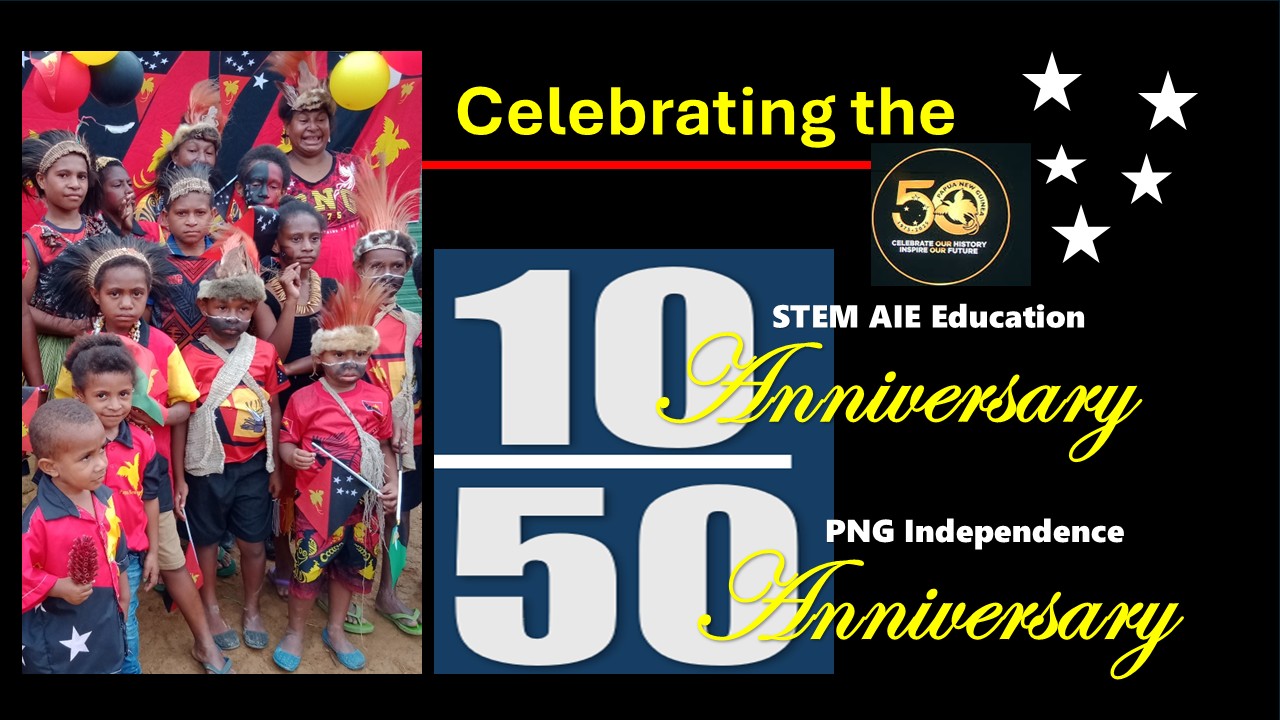
Our work over the past ten years has continued to receive positive feedback from parents and many stakeholders. The conOver the past ten years, our work has continued to gain recognition from parents, communities, and many stakeholders. What began as an invisible concept has, through dedication, commitment, and collaboration, grown into a model that is reforming and transforming education in our country.
On this Tenth Anniversary, we express our heartfelt gratitude to all who have supported this vision:
- The landowners and the community who made space for the school.
- Past and present parents and teachers.
- Friends, networks, and supporters who stood with us.
- The North Fly District Development Authority, the Department of Education and Curriculum Development Division, and the Department of Foreign Affairs and Trade.
- The Australian High Commission (Port Moresby), the Consulate General (Lae), and Australia Awards PNG.
- Our collaborators in universities and institutions in PNG and Australia, including QUT, ANU, PNG University of Technology, UOG, UPNG, PAU, IUE, and St. Peter’s Channel Teachers College.
- Our partners, business houses, and organisations: BSP, Bilum Books, Oxford University Press, Pacific Science Circus, STEM Punks Australia, STEM PNG, STEM Nau Community, Our Deeper Futures Pty Ltd, PNG Flying Lab, Bata Des Consultancy, Kair Bii Nem, Kiunga Urban LLG, Catholic Church and Health Services, and St. Gabriel’s Technical Secondary School.
Each of you has played a vital role in this milestone achievement. On this 10th Anniversary, we sincerely thank you for standing with us through thick and thin. The story does not end here—we will continue to progress for God, country, and humanity.
Thank you, and may God bless us all.